


Fable 5 went dark this week after a U.S. government directive targeting access to Anthropic’s most advanced models. Anthropic’s response was broader: remove access for all users.
If you build on frontier models, the question is no longer theoretical. How exposed are you to a switch you do not control?
The lesson is that rented frontier capability is revocable. Backup models help, but they do not solve the deeper problem. A model you do not own can be recalled, restricted, degraded, or made unavailable through a decision made above you. You may find out at the same time your users do.
That risk always existed in theory. This week it became an operating assumption.
The common read is that the newest model is always the prize. I think that is incomplete. The newest model is also the least understood model. It has the least operating history, the least mapped behavior, and the greatest regulatory surface area. For many commercial workflows, stepping back from the frontier gives up less capability than people assume while reducing exposure to the most switchable part of the stack.
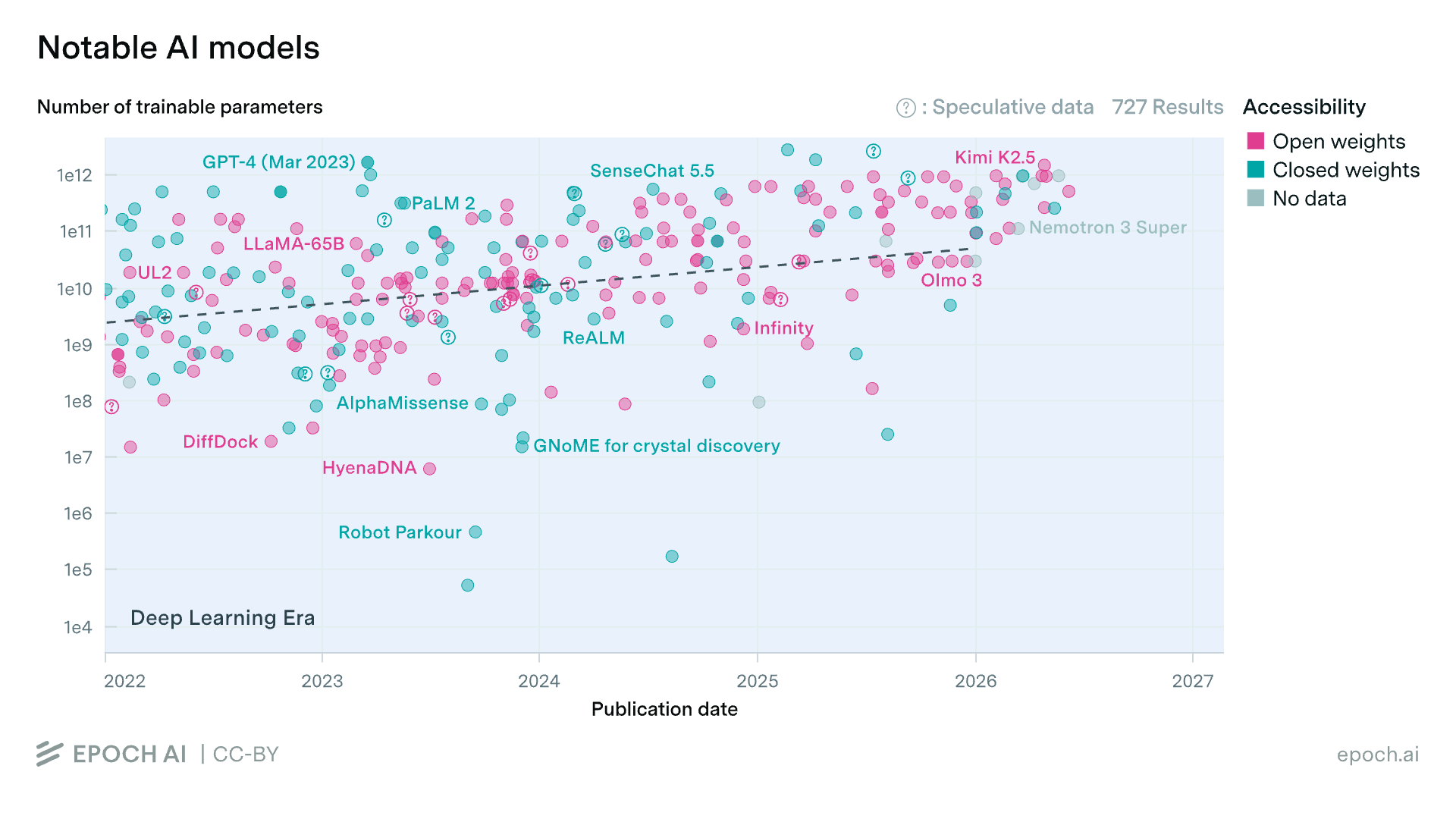
For most companies, the edge was never only in the model. It is in proprietary data, domain judgment, workflow design, and evaluation. A near-frontier or open-weight model, paired with the right data and measured against the work that actually matters, can beat a generic frontier model on the jobs that pay you.
Keep using frontier models. Do not build the company around the assumption that one will always be available.
We have spent years talking about data sovereignty. Inference sovereignty is next. Controlling where your data sits is different from controlling the model that reasons over it. The expertise you layer into a model through tuning, memory, skills, prompts, evaluations, and workflow design becomes an asset you either own or rent.
The firms that demanded data privacy will increasingly demand inference sovereignty too: control over the model, the reasoning layer, and the institutional know-how embedded inside it.
The practical answer is architecture.
Keep model IDs behind an abstraction layer. Maintain fallback paths across frontier, near-frontier, and open-weight models. Move memory, skills, evaluations, and routing logic outside any single provider. Treat frontier access like an interruptible input: useful, powerful, and not fully under your control.
For energy, the bigger implication is fragmentation.
If more firms decide they need inference sovereignty, they will not all build hyperscale campuses. They will want controlled inference capacity closer to their data, operations, customers, or regulatory boundary. Some will sit in smaller data centres. Some will sit behind the meter. Some will be embedded inside industrial sites, campuses, labs, hospitals, banks, utilities, and defence-adjacent facilities.
The aggregate load may stay the same or rise.
Hyperscale compute is efficient because it pools demand, runs infrastructure hard, optimizes cooling, and shares capacity across many users. Sovereign inference moves in the other direction. It favours control over utilization, proximity over scale, redundancy over sharing, and permission over pure cost minimization.
That sacrifices system efficiency for control. For firms worried that a provider, regulator, or government can interrupt access to their inference layer, the trade may be rational.
For grids, this makes AI demand harder to see and harder to plan around. Large interconnection requests will still matter, but more compute may appear as smaller clusters embedded inside commercial, industrial, institutional, and behind-the-meter load. The forecast becomes less about known hyperscale campuses and more about a sovereignty premium: lower utilization, more redundancy, and more distributed compute.
Inference sovereignty does not stop at the model. It extends through the chip, the site, the interconnection, and the meter. If the goal is control, compute and power become part of the same stack.
Comments, questions or things I missed? Send me a note (or hit reply) - I would love to hear from you. Thanks for reading!