


Winter Storm Fern arrives this weekend. For those in its path, I wish you warmth and safety. For those further afield (or market participants), Fern provides a stress test of the rapidly evolving North American energy complex.
Load Growth
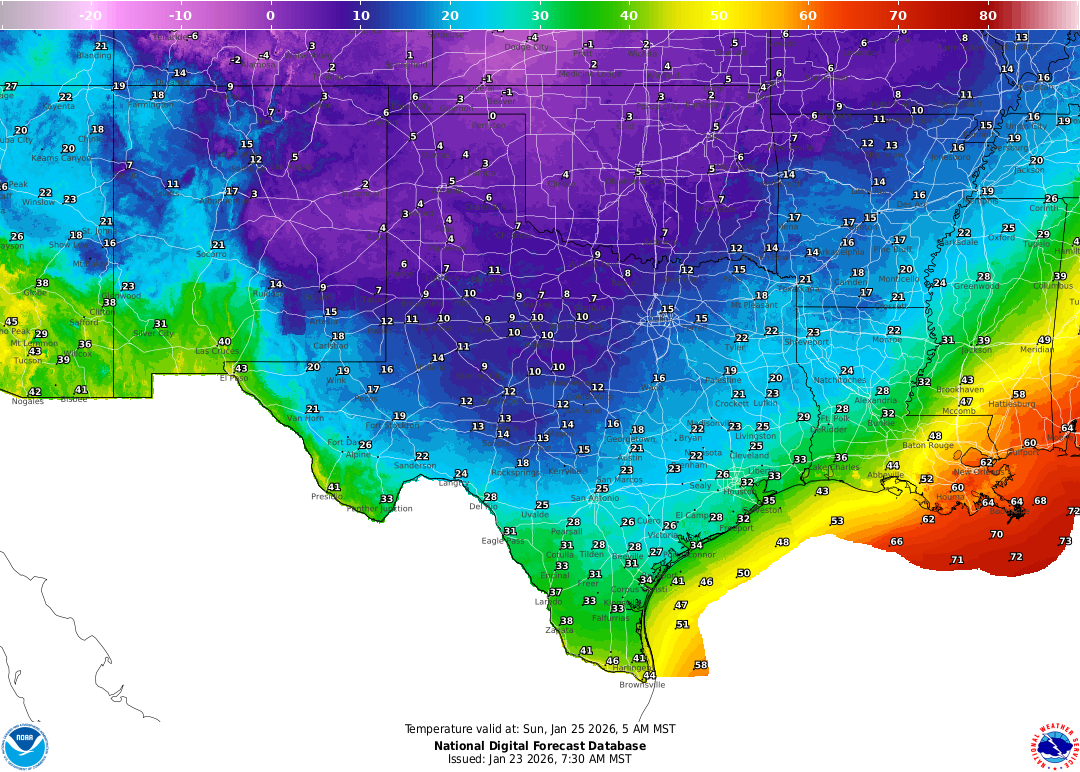
Texas where temperatures are set to fall well below freezing with localized lows in the Permian Basin hitting 15°F. ERCOT peak load is projected to hit a new winter record of ~82.6 GW on Monday morning. (Figure 1).
Figure 1 | Forecasted Temperatures at 6am CT on January 25
The winter record is part of a persistent structural trend of “higher highs” in winter demand:
Jan 2026 (Projected): ~82.6 GW
Feb 2025: 80.5 GW
Jan 2024: 78.3 GW
Dec 2022: 74.5 GW
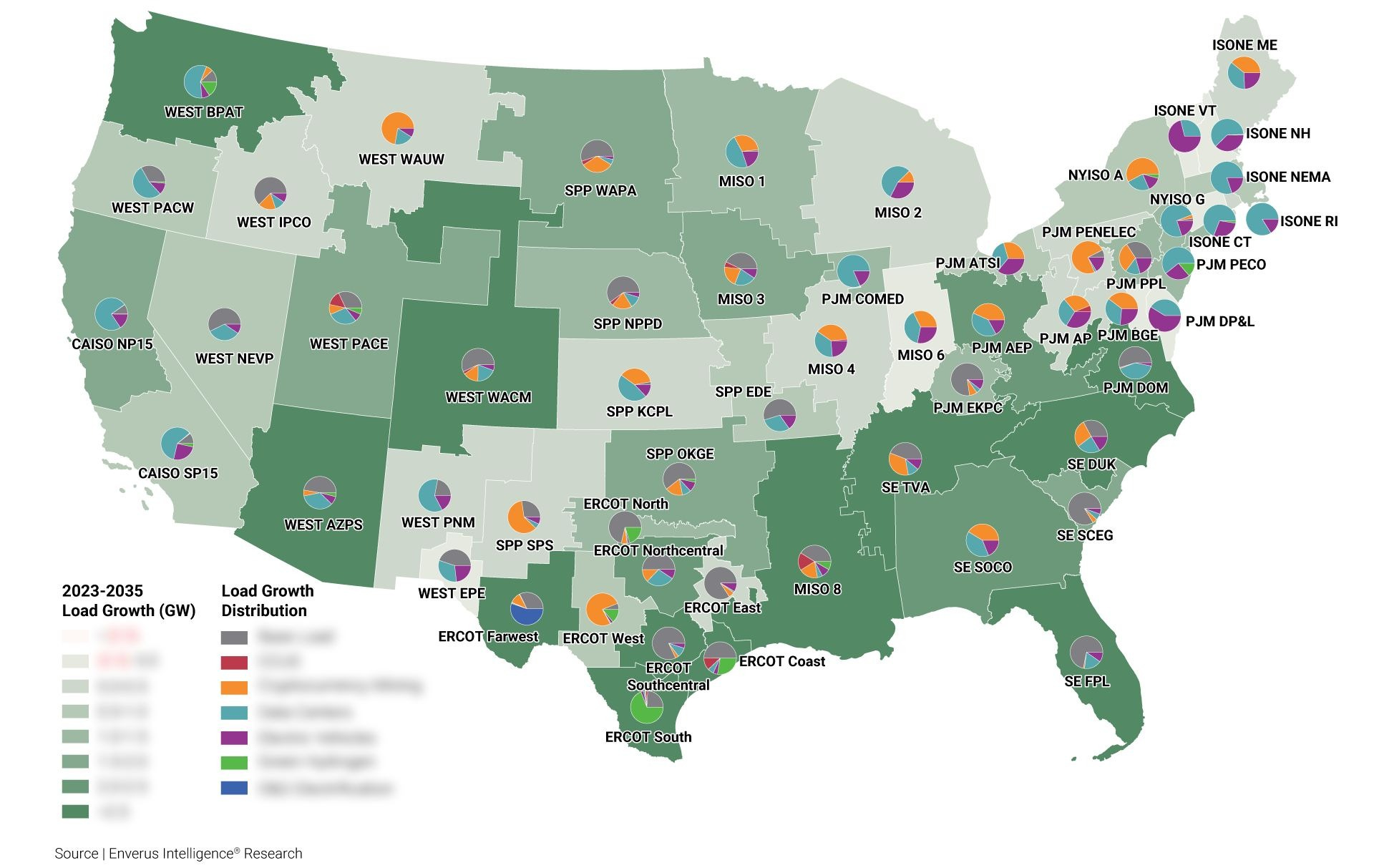
The trend of sequential records is illustrative of the underlying load growth driven by industrial growth, data center expansion, and electrification (Figure 2). The growing base means each new winter storm (a near annual occurrence) pushes the record higher.
Figure 2 | Load Growth to 2035 by Load Zone and Driver
The BESS Buffer
More than load is changing in the state. The composition of generating capacity has also shifted rapidly over the last several year, most notably with the growth of battery storage (BESS). BESS capacity now sits at ~18.5GW, well up from ~3.9GW at the end of 2023. The growth of these resources should add resilience a Fern passes through.
Fuel & Physics Risk
Two risks remain difficult to quantify:
Upstream Freeze-offs: Permian Basin temperatures are low enough to trigger hydration icing at the wellhead and impact fuel supply for gas-fired thermal units. Historical analogs suggest production losses could reach 2–3 Bcf/d, putting immediate pressure on natural gas cash prices (already trading near $18/MMBtu at Henry Hub).
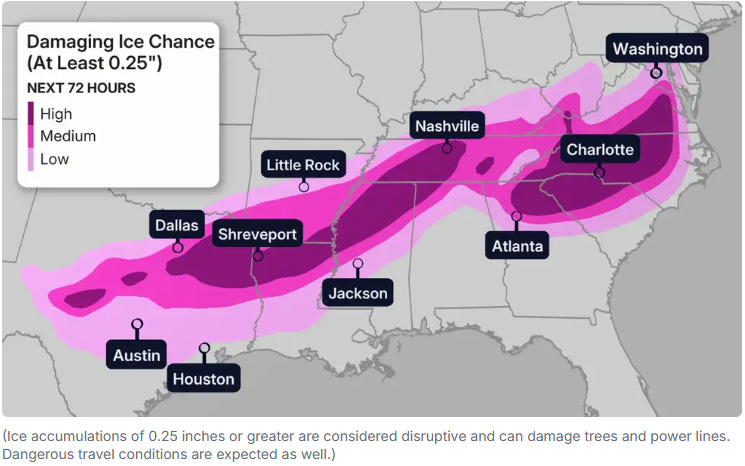
Ice Loading: Forecasted freezing rain/ice build-up (Figure 3) puts mechanical strain on transmission and distribution infrastructure. While designed to withstand the forecasted build-up, these loads increase the risk of outages.
Figure 3 | Potential Ice Accumulation
Much has changed over recent years to make Texas more resilient to storms like Fern. While unpredictable, let us hope for a boring (albeit chilly) few days.