


The nuclear renaissance accelerated in 2025. Does it have staying power?
The headlines are bullish: Google’s 25-year PPA with NextEra to restart Duane Arnold (IA), Meta’s 20-year commitment to the Clinton Clean Energy Center (IL), and the $80 billion Westinghouse/Cameco partnership to deploy new reactors across the US. The capital is moving, and the signal is clear. Nuclear is back.
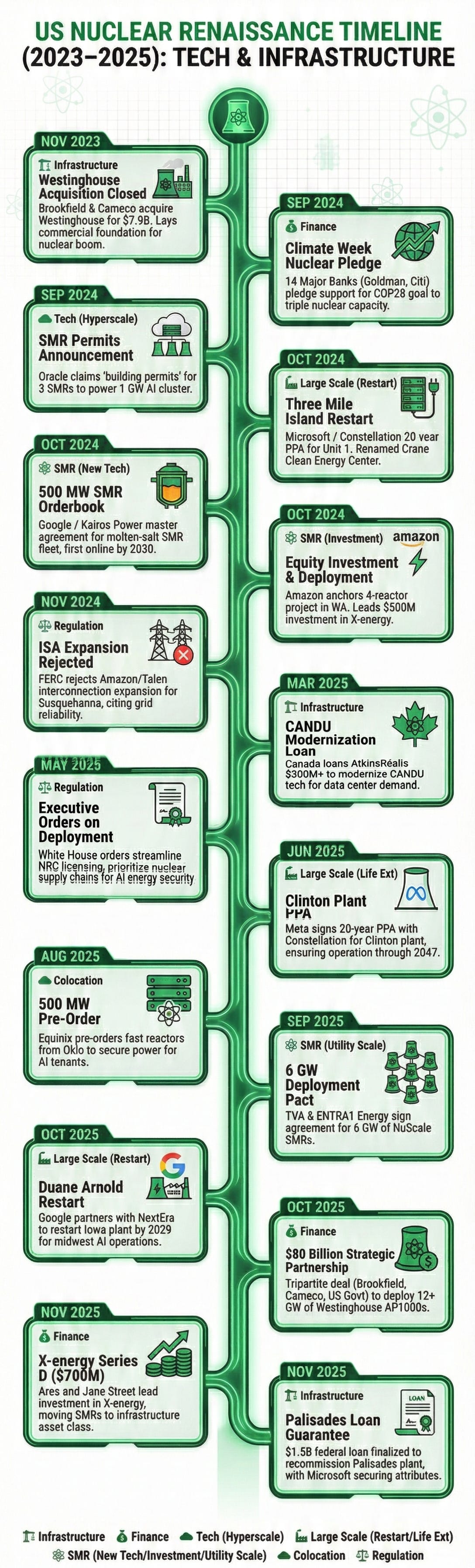
However, amidst the bullish signals and Big Tech adoption, we must distinguish between opportunistic capture of existing capacity and a viable path for future deployment. Three structural questions challenge the long-term thesis:
The Flexibility Mismatch The World Nuclear Industry Status Report identifies a friction point: the modern grid demands short-term flexibility to balance renewables, while nuclear offers stable, flat baseload. While AI data centers demand that same flat profile (24/7 uptime), the broader energy system is evolving toward flexibility. Furthermore, nuclear outages require 100% redundancy to meet data center SLAs. Is the current activity a structural shift, or just tech giants securing the only available firm power before the window closes?
The Velocity of Learning Curves Learning curves drive cost reductions, but they require volume and velocity. As capacity doubles, costs decline.
Currently, competing dispatchable low-carbon sources (like geothermal and gas plus CCUS) are iterating faster than nuclear. Slow development means a flattened learning curve. The risk is not that nuclear lacks merit, but that it will miss the economic window because it cannot drive down costs as fast as its faster-deploying competitors. Will a slower learning curve mean nuclear misses out?
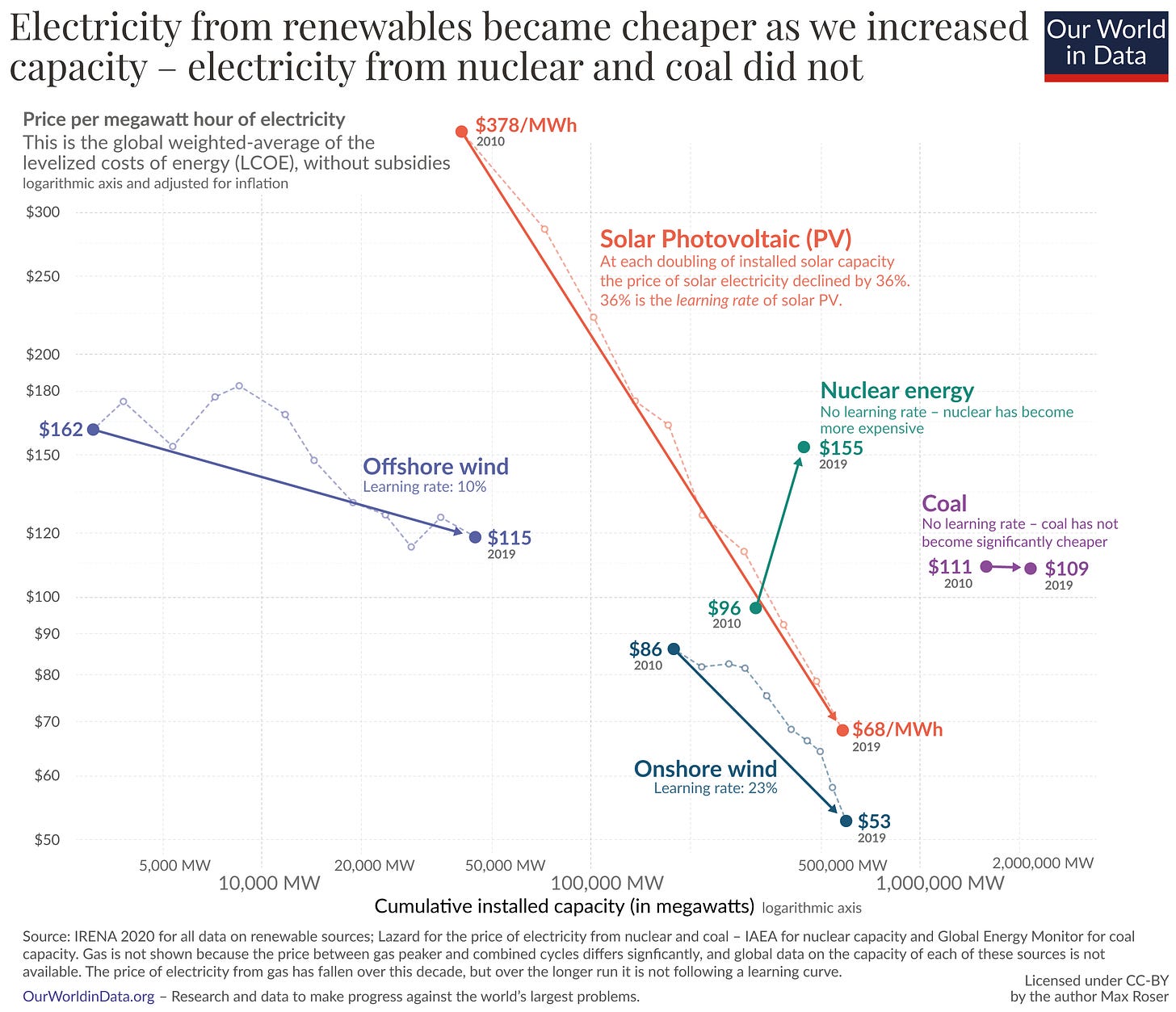
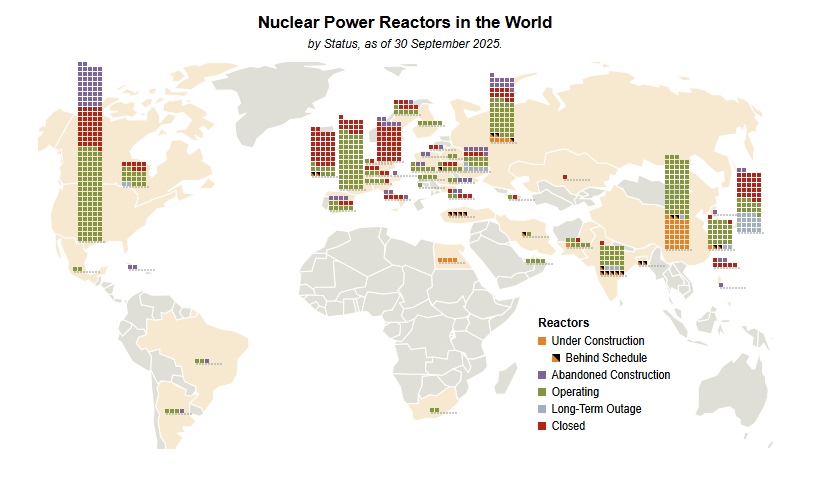
Source | Our World in Data Is this strictly a US Phenomenon? The AI-energy nexus is global, but the nuclear solution seems largely concentrated. There are exceptions—notably the UAE, where Microsoft’s $1.5B investment in G42 is effectively a bet on “sovereign AI hosting” powered by the Barakah nuclear plant. But outside of the US and select sovereign strategic assets, are we seeing the same marriage of tech and nuclear?
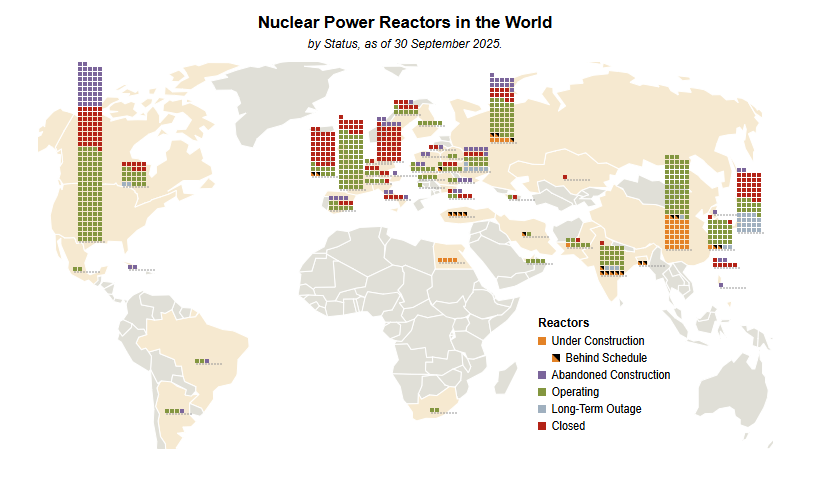
Source | World Nuclear Industry Status Report
I’m exploring these questions this week - what do you suggest I read to test the assumptions and explore these questions?