Judgment Is the Scarce Capability
When AI makes analysis cheap, the edge is knowing which decisions matter, which questions move them and how to approach the problem.

When analysis gets cheap, judgment gets scarce. The edge is knowing which decisions matter, what questions can influence them, and how to approach the problem.
The routine part of analytical work is moving to the system. I have been building AI into my own workflow for months. It pulls background, surfaces prior positions and stitches together data I would have spent days gathering. That is the cheap part now. AI does not replace judgment. It replaces routine.
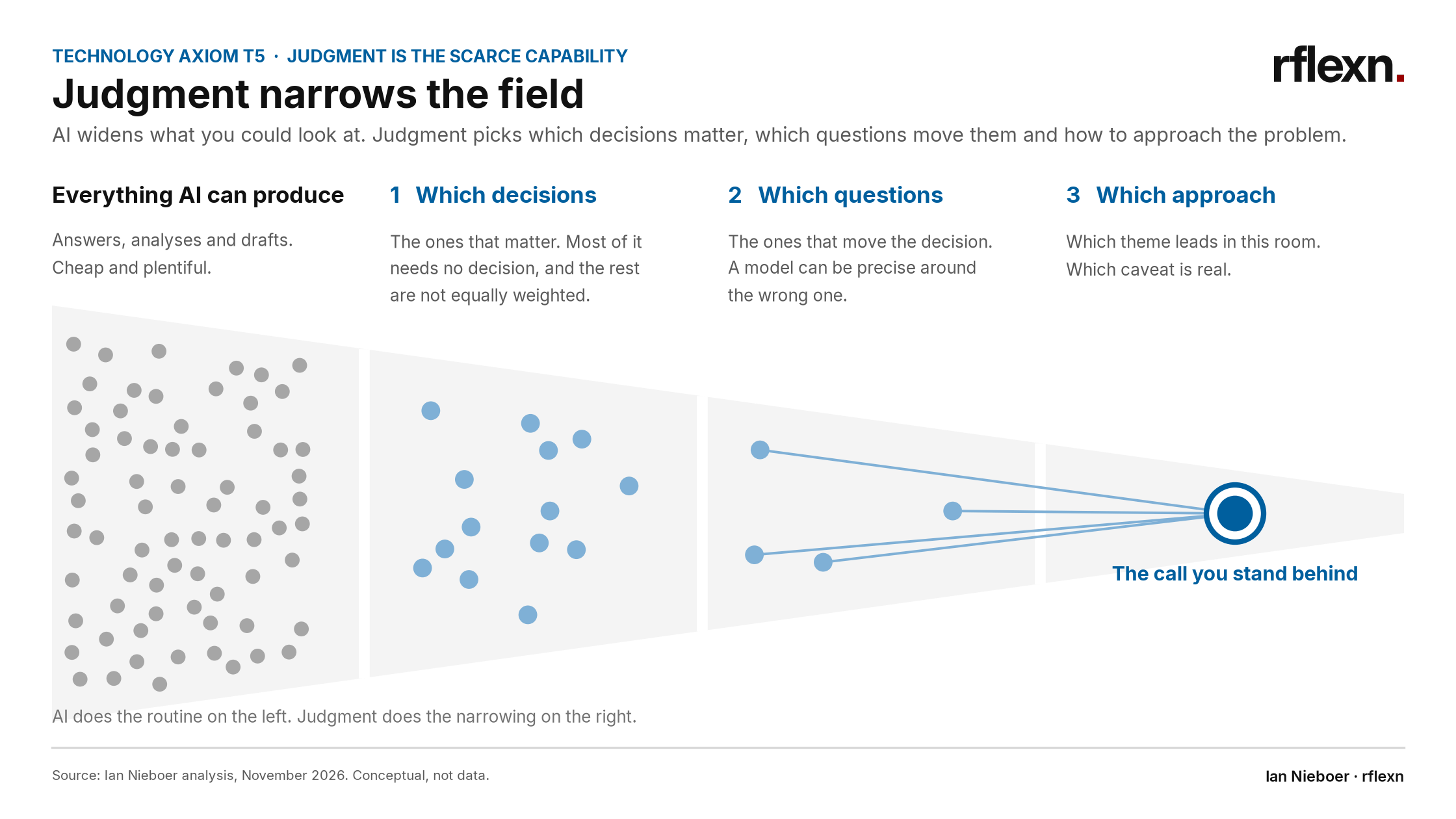
Start with which decisions matter. Most of what lands on a desk does not need a decision at all, and the ones that do are not equally weighted. A model will happily answer every question you hand it. It will not tell you that this one deserves the afternoon and that one can wait.
Then the questions. A model can be precise around the wrong question. It can hand you a clean number for something nobody in the room is actually deciding. Picking the question that moves the decision is judgment, and a lot of analysis goes wrong right there, before any data is touched.
Then the approach. Knowing when a sentence sounds good and says very little. Knowing when a caveat is real and when it is throat-clearing. Knowing which theme deserves to lead in a given room, because the same analysis lands differently with a long-duration investor than with someone running a trading book. None of that comes out of the model by default.
Judgment selects from the expanded possibility space. When AI can produce ten plausible answers in the time it used to take to produce one, the value moves to choosing well. The next step is standing behind the choice, which is why I think taste is a position you will defend.
So where does judgment come from if the system does most of the making? You still have to do some of the work. Routine builds taste, wisdom and intuition, and there are lessons for evaluating work that you only earn by producing it. That is why I still build the model from raw data once in a while, and why I think cutting the junior pipeline is the AI hiring error.
It also matters because AI amplifies what you already are. It amplifies your judgment, your patterns and your biases. Good judgment gets more leverage than it ever had. So does bad judgment.
The decision chain has not changed. Inputs, prediction, judgment, decision. AI is pushing hard on the first two and leaving the third to us. That is where I am spending my time.
Discussion about this post