Episode Length: 18:22
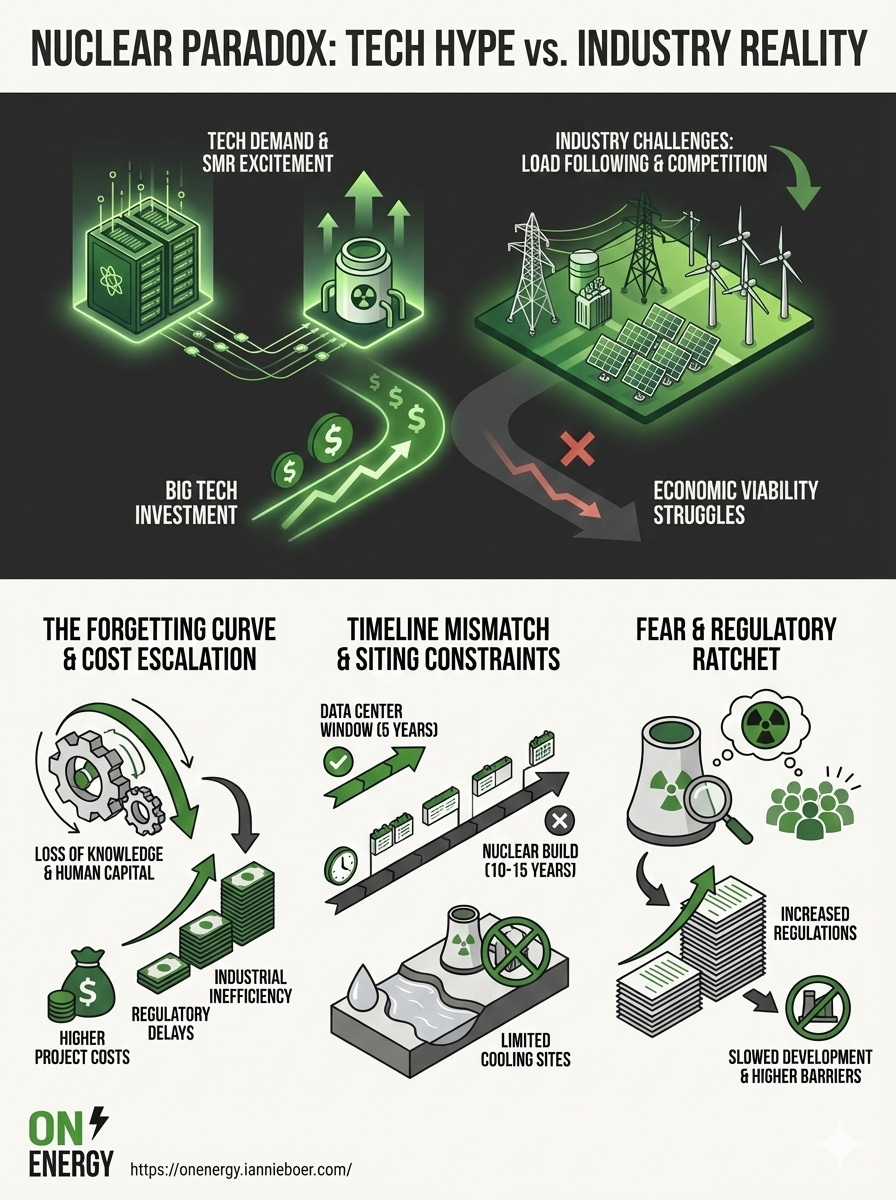
Episode Summary In this episode, the hosts explore the current conflicting narratives surrounding nuclear energy, contrasting the excitement from big tech companies investing in Small Modular Reactors (SMRs) with a recent, more pessimistic World Nuclear Industry Status Report. They discuss the challenges of “load following” in a grid dominated by renewables and batteries, while also analyzing why construction costs and timelines have escalated in the West compared to China. The conversation concludes with a look at the impact of public fear, safety regulations, and the potential future of nuclear power.
Topics Covered
The Nuclear Paradox: The disconnect between tech headlines regarding SMRs and industry body reports on the future of nuclear.
Economic Challenges: Issues with load following, ramping capability, and competition from battery storage.
Cost & Construction: The impact of regulatory delays versus the industrial “forgetting curve” on project costs.
Safety & Perception: How historical events like Fukushima and Three Mile Island drive regulatory ratchets and public fear.
Siting Constraints: The limitations of finding sites with adequate water cooling capacity.
Key Takeaways
Tech vs. Industry Reality: While big tech is pushing for nuclear to power data centers, industry reports highlight struggles with load following and economic viability against solar and batteries.
The “Forgetting Curve”: High costs aren’t just regulatory; they stem from a lack of iteration and velocity, leading to a decay in industrial knowledge and human capital.
Timeline Mismatch: There is a discrepancy between the 5-year demand window for data centers and the 10-15 year construction timeline for nuclear facilities.
Fear Hinders Development: The industry is heavily stifled by public fear of radiation, where even minor failures or accidents without casualties set the industry back significantly.